Most professional fund managers fail to beat a simple index fund over the long run.
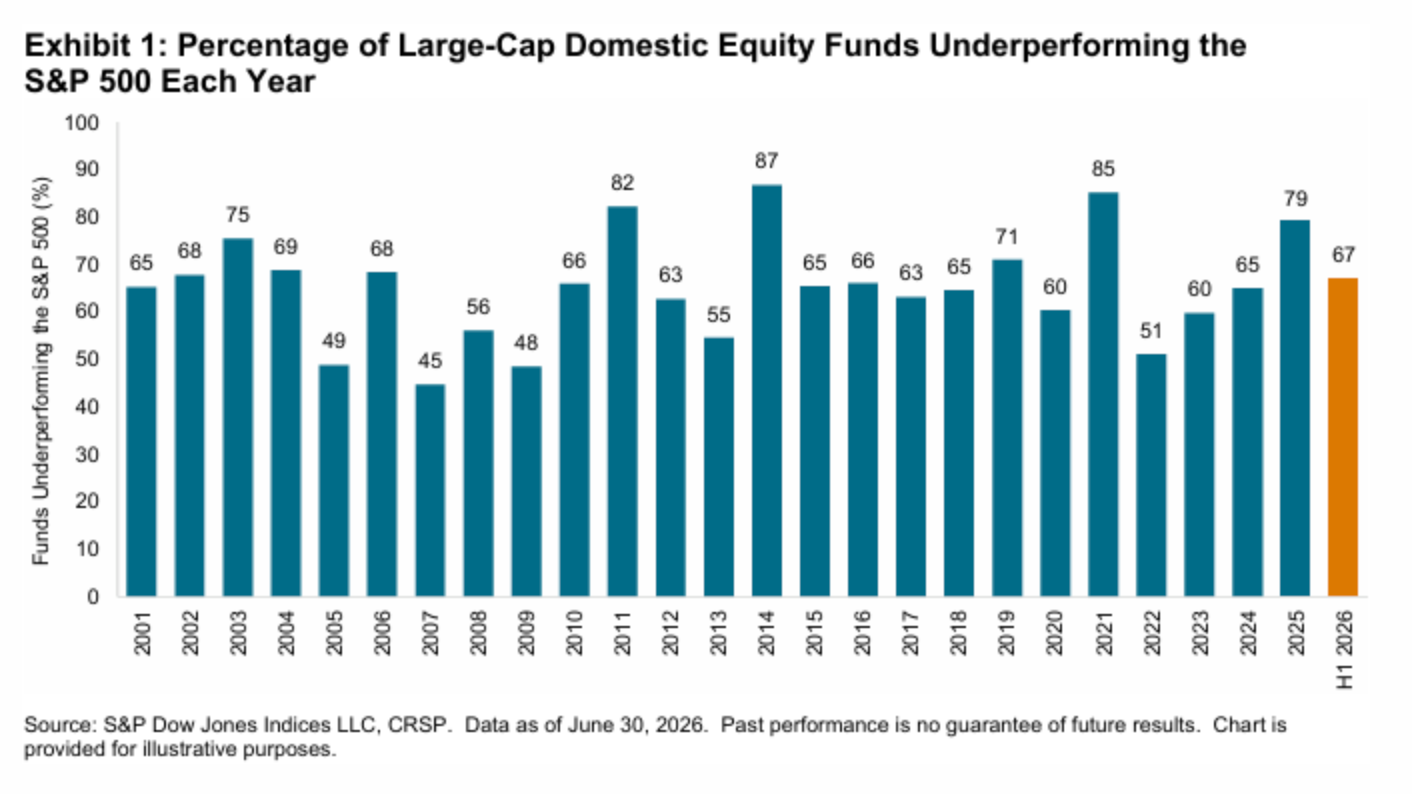
These are people with research teams, data terminals, and decades of experience. So what chance do an everyday investor like you and me have?
More than you might think, and not for the reasons people assume.
Investors rarely fall behind because they lack information, especially with the rise of AI. They fall behind because they react to headlines, chase hype, panic in corrections, and overpay for popular stocks.
In other words, it’s behaviour and not intelligence.
Today we break down Adam’s 16 golden rules of investing, which helped him beat the market for almost a decade, and revolve around a set of rules rather than predictions.
Rules don't eliminate risk. But they give you a consistent way to make decisions when emotions run high, which happens more often than you think. If you’re a long-term investor, you know.
Here are his 16 Golden Investment Rules, grouped into three themes:
- How the market generally behaves
- What to buy and how much to pay
- Portfolio management
Understand how the market actually behaves
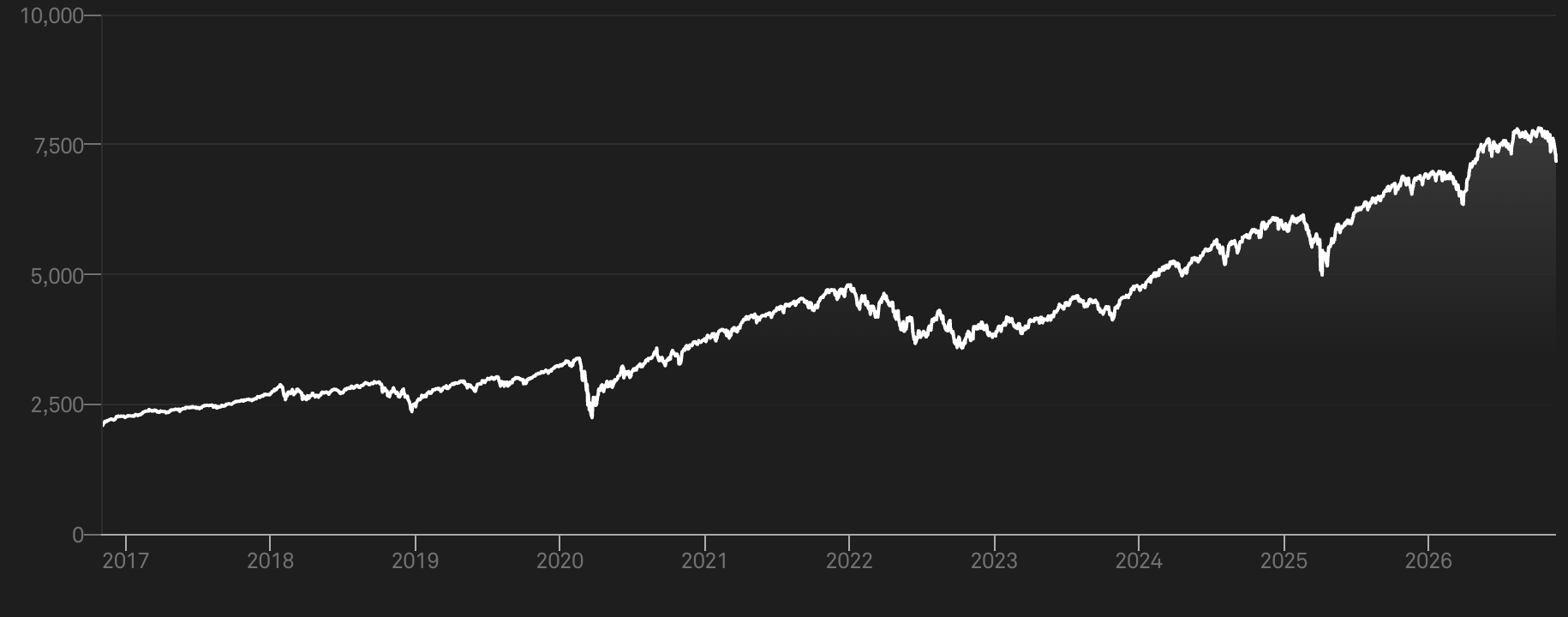
Rule 1: Broad market indexes have historically trended up over the long run
Over long periods, major indexes like the S&P 500 have historically risen, driven by inflation, earnings growth and index rebalancing (weaker companies are replaced by stronger ones). While past trends don't guarantee future results, this long-term tailwind is why time in the market matters.
Rule 2: In the short term, nobody can predict where the market will go
We can make probabilistic guesses based on the current trend. But markets can stay irrational for longer than anyone expects. The goal is never to predict the next move. It's to be prepared for any of them.
Rule 3: Don't act on predictions from economists, analysts, or the news
Forecasts make great attention-grabbing headlines but poor decision-making tools. If your buy and sell decisions depend on what someone thinks the market will do next month, you're relying on the one thing Rule 2 says nobody can do. And if you follow consensus, you’ll generally only perform as well or as badly as the market does.
Rule 4: Corrections are normal and could be opportunities
Historically, the market has seen a correction of more than 10% roughly once every two years. For investors with a plan, these dips are a chance to buy quality companies at better prices.
Rule 5: Bear markets happen too, and can be even bigger opportunities
Declines of more than 20% have historically occurred about once every five years, with an average fall of around 36%. They feel terrible while they're happening. But for long-term investors, some of the best buying opportunities have come during these periods.

Know what to buy, and what to pay
Rule 6: Focus on great companies with wide economic moats
Look for businesses with durable competitive advantages, consistent growth in sales, earnings, and free cash flow, high returns on capital, clear growth catalysts, and strong balance sheets. A wide moat makes it harder for competitors to take that success away.
Rule 7: Invest in businesses you truly understand
If you can't explain simply how a company makes money, you won't know whether a price drop is a warning sign or an opportunity. Start with businesses whose products and services you use, and stay within your circle of competence.
Rule 8: Avoid mediocre stocks, no matter how cheap they look
A low share price isn't the same as good value. Weak businesses often look cheap for a reason, and they can stay cheap for years.
Rule 9: A great business can be a poor investment if you overpay
Quality is half the equation. A great company becomes an excellent investment when you buy it below its intrinsic value. Pay too much, and even a wonderful business could deliver disappointing returns.
Rule 10: Never give in to FOMO
Hyped-up stocks that are overvalued or technically overextended are where many investors get hurt. Watching a stock rally without you is uncomfortable. But buying at the peak of the excitement will be far more painful in the long run.
Build and manage your portfolio with discipline

Rule 11: Only invest money you won't need for at least 3–5 years
If you might need the cash next year, a market dip could force you to sell at the worst time. Quality investment tends to do its heavy lifting from the third to fifth year onward, so give it room and time to work.
Rule 12: Buy consistently, and build positions in tranches
Enter shares of great companies when they're undervalued and at technical support levels, and build a full position over 3–4 tranches. This removes the pressure of getting one "perfect" entry. Which is often impossible to time.
Rule 13: You'll never buy at the absolute bottom, and that's fine
Nobody can consistently time the exact low. If you're buying at a price that's fundamentally undervalued and technically supported, that's a sound entry, even if the stock dips further afterwards. And that’s why entry is done in tranches.
Rule 14: Hold 10–30 high-quality companies, with fairly equal allocation
Concentrating on one or two stocks magnifies the damage when something goes wrong. Spreading capital across 10–30 quality names, with growth companies at half the usual allocation, helps keep any single mistake from sinking the portfolio.
Rule 15: Diversify across growth, defensive, dividend, and speculative growth stocks
Different types of stocks tend to behave differently in different market conditions. A mix helps your portfolio hold up across cycles rather than relying on one type of stock to carry it.
Rule 16: Sell when the business stops being great, or when there's a better use for the money
Price drops alone aren't a reason to sell. Selling when a company's economic moat deteriorates, or when the proceeds can go into a stronger opportunity: a wider moat, better value and higher growth.
Rules beat predictions in the Long Run
Look back at the 16 rules, and you'll notice something: none of them require you to predict the market. And out of 16 rules, only one of them is about selling.
They ask you to understand how markets behave, buy quality at a sensible price, and manage your portfolio with discipline. That's a skill set that needs to be nurtured.
No set of rules guarantees you'll beat the market. And having clear rules is what separates investors who stay the course from those who buy high, sell low, and wonder what went wrong. Knowing the rules is the easy part.
Applying them consistently, especially when markets get emotional, is where most investors need help.

Learn to apply these rules at Black Market X
This year marks the 10th edition of Black Market, Piranha Profits' biggest event of the year. It's where we bring together Adam Khoo, Bang Pham Van, and Alson Chew to show how investors and traders put frameworks like these into practice.










submit your comment