Many retail traders only know one way to profit when a stock is going down: buy puts. Buying puts is a costly bet that decays with time and only pays off if the move comes fast enough to outrun theta. The call credit spread sits in a corner of the options map: a capital-efficient, defined-risk way to express the idea that a stock has stopped going up.
The strategy is known as the credit call spread, the bear call credit spread. The structure is consistent: sell a higher-premium call, buy a cheaper call further out of the money, collect a net credit, and the position tends to profit if the stock stays below a level.
This guide covers what a call credit spread is, the mechanics, a worked call credit spread example, how the call credit spread strategy compares to put-based alternatives, what happens with a call credit spread in the money, assignment considerations, and the psychology many traders confront.
What Is a Call Credit Spread?
A call credit spread is a two-leg, defined-risk options strategy made up of two calls on the same underlying with the same expiration. A lower-strike call (closer to the money) is sold, and a higher-strike call (further out of the money) is bought. The premium collected from the short call exceeds the premium paid for the long call. The net credit lands in the account immediately.
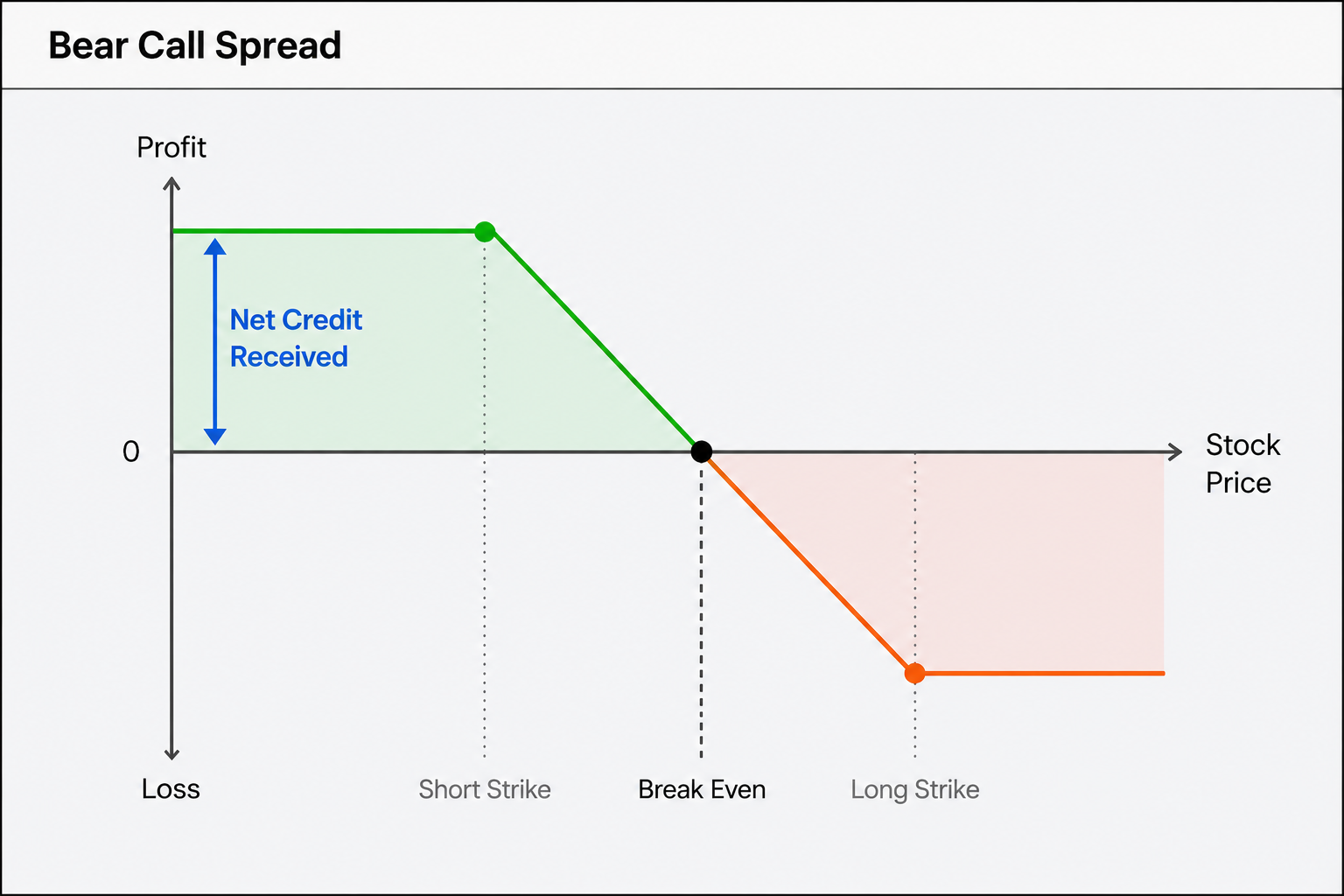
The position tends to profit when the underlying stays below the short call's strike at expiration. Both options expire worthless. The full credit is kept. The long call sits there as cheap insurance, capping the loss if the stock rips upward and through both strikes.
So the answer to "call credit spread bullish or bearish?" that many traders ask, is bearish-to-neutral. The position tends to profit when the stock falls, drifts sideways (as long as it stays below the short strike).
How the Call Credit Spread Option Strategy Works
The call credit spread option strategy performs when three forces line up: time decay (theta), elevated implied volatility (richer premiums collected), and a stock that stays clear of the upside.
The Two Legs of a Bear Call Spread
1. Short call at a lower strike. Many traders place this above a resistance level or around the 20 to 30 delta region. This is where the premium and the risk live.
2. Long call at a higher strike. Cheaper insurance. Defines the width of the spread and caps the maximum loss.
The Greeks Profile
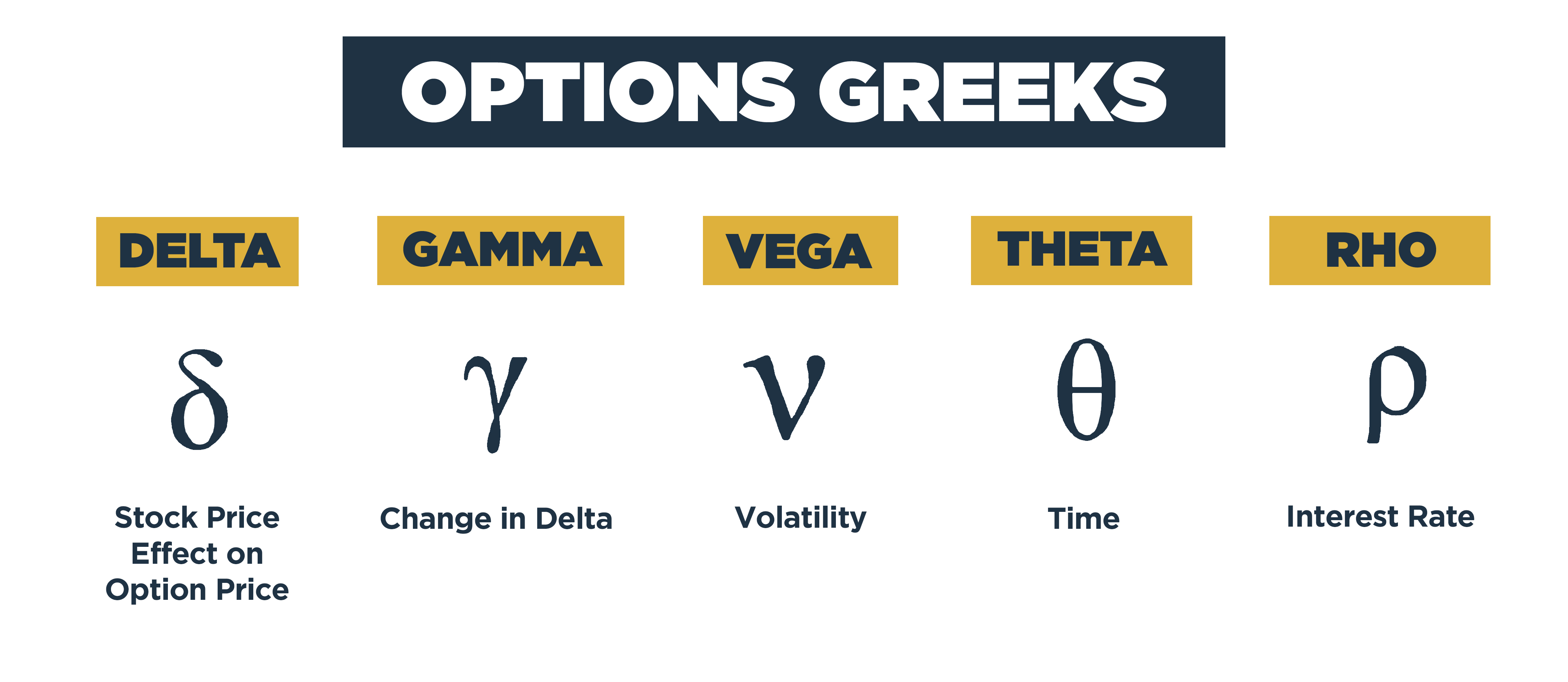
- Theta positive: Time decay tends to work in favour of the position.
- Delta negative: Slight bearish lean (short calls = short delta).
- Vega negative: Rising IV tends to hurt; falling IV tends to help. Selling into elevated IV is the conditions many traders look for.
- Gamma negative: As price approaches the short strike, sensitivity to further upside moves accelerates.
A Concrete Bear Call Credit Spread Example
Say $XYZ trades at $100. It just had a strong run from $85 and is now flirting with a resistance level at $108. The view is that the rally is overextended.
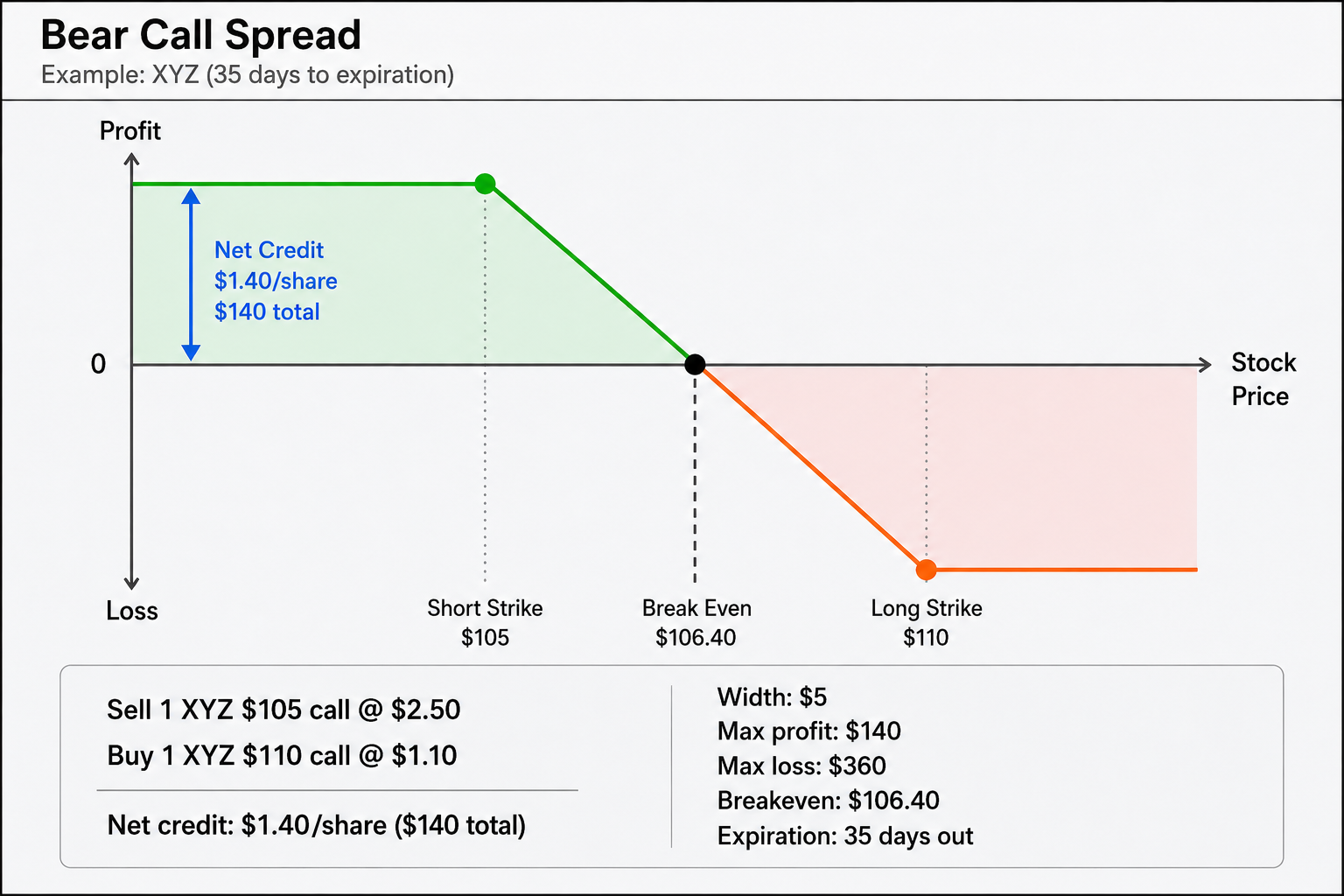
The credit call spread example:
- Sell 1 XYZ $105 call for $2.50
- Buy 1 XYZ $110 call for $1.10
- Net credit: $1.40 per share, or $140 total
- Width: $5
- Maximum profit: $140
- Maximum loss: $500 minus $140 = $360
- Breakeven: $105 plus $1.40 = $106.40
- Expiration: 35 days out
The trade is locked in. The max profit is $140. The max loss is $360. The job is to keep XYZ below $105 by expiration (or close earlier for partial profit).
Scenario A: XYZ Closes at $98
Both calls expire worthless. The $140 is kept. Return on risk: $140 / $360, roughly 38.9% over 35 days. This is the more common outcome by design.
Scenario B: XYZ Closes at $107 (Through the Short Strike)
A call credit spread in the money on the short leg but not the long leg. The $105 short call has $2.00 of intrinsic value, worth $200. The $110 long call expires worthless. The spread is worth $200 to close. The $140 collected offsets some of that, leaving a realised loss of $60. The position crossed the short strike but did not hit max loss because the long strike held.
Scenario C: XYZ Rips to $115
Both calls finish in the money. Short $105 call worth $1,000. Long $110 call worth $500. Spread value: $500. The $140 collected offsets some of that, realising the full $360 max loss. From here, XYZ can run to $150 or $200; the loss does not grow.
The long call is the structural reason the loss is capped. A naked $105 call without the long-call protection would have been exposed to unlimited upside losses. The call credit spread strategy trades a smaller premium for sleep-well-at-night defined risk.
Call Credit Spread vs Put Credit Spread
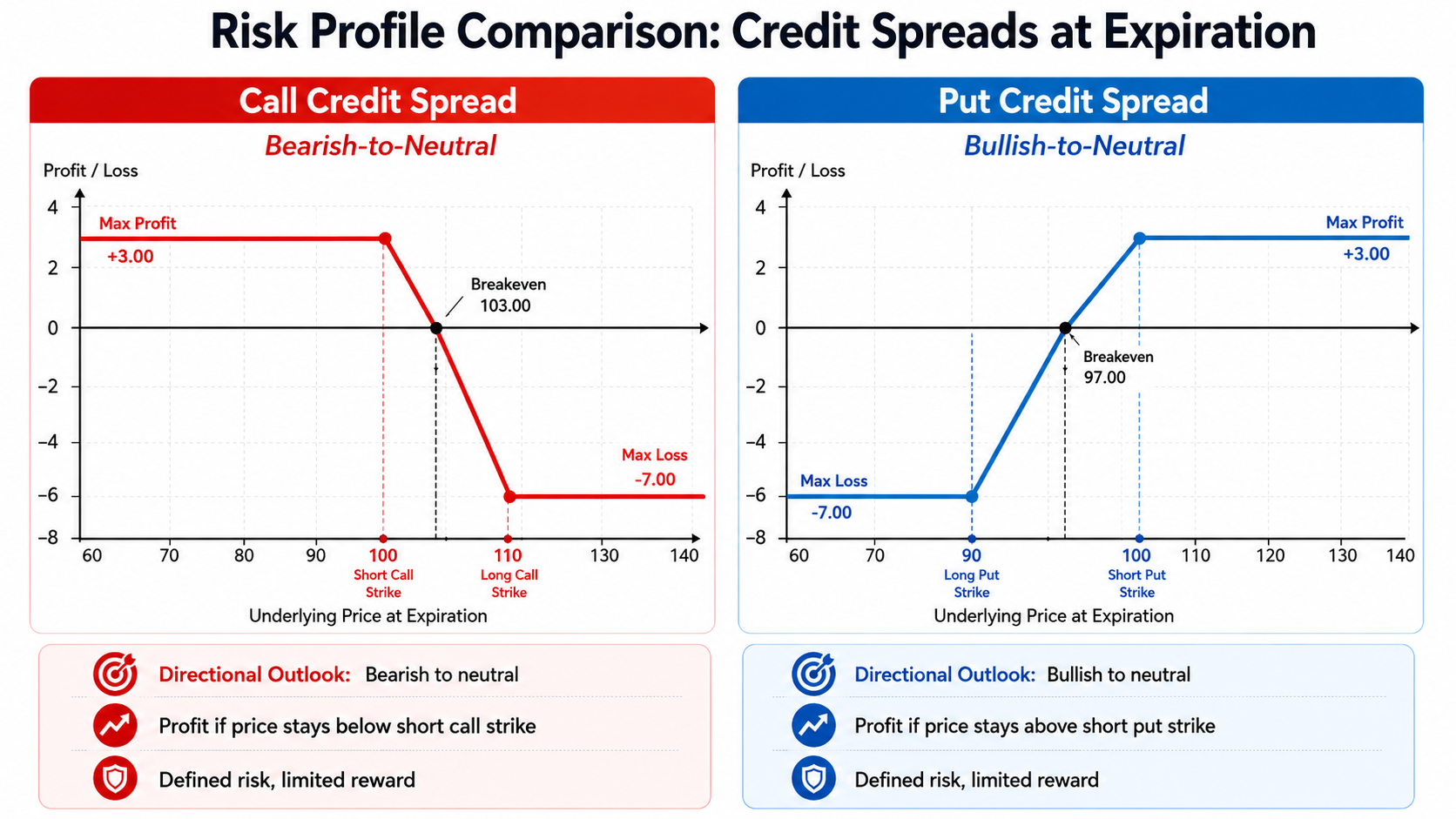
Traders often weigh call credit spread vs put credit spread. Both collect a credit, both are defined risk, both benefit from time decay. The differences come down to directional bias, structure, and the market environment they tend to perform in.
A put credit spread tends to profit when the stock stays above a level. It is bullish-to-neutral.
A call credit spread tends to profit when the stock stays below a level. It is bearish-to-neutral.
Same family. Mirror images. The fit between them depends on the view. In a sideways market, both can be deployed on the same underlying to form an iron condor, which tends to profit when the stock stays inside a range.
Call Credit Spread vs Put Debit Spread
Call credit spread vs put debit spread is the comparison many traders find useful. Both are bearish, but they handle time and volatility very differently.
The put debit spread (buy a higher-strike put, sell a lower-strike put) tends to pay off only if the stock falls fast and far. Theta is against the position. Vega tends to help.
The call credit spread (sell a lower-strike call, buy a higher-strike call) tends to pay off when the stock falls, drifts sideways, or even rises slightly. Theta tends to help. Vega tends to hurt.
A put debit spread tends to be a bet on movement. A call credit spread tends to be a bet on the absence of upside movement. Different jobs.
When a stock is expected to collapse quickly (earnings disaster, regulatory hit, structural shift), the put debit spread tends to be the more efficient trade. When the view is that a stock has stalled or hit a ceiling, the call credit spread tends to be more capital-efficient and offers a wider margin of error.
Bull Call Spread vs Put Credit Spread
The "bull call spread vs put credit spread" question weighs two bullish strategies, one debit and one credit.
A bull call spread (debit) tends to pay off only if the stock rises and crosses the strikes. Lower probability, higher payoff per dollar risked.
A put credit spread (credit) tends to pay off as long as the stock stays above a level. Higher probability, lower payoff per dollar risked.
Same bullish bias, opposite risk-reward profiles. In a strongly trending market with cheap IV, the bull call spread tends to shine. In a sideways or grinding market with rich IV, the put credit spread tends to shine.
Knowing both lets a trader express the same view with the structure matched to the environment, instead of forcing every bullish thesis into the same template.
Psychology Around Call Credit Spreads
Selling premium on calls activates a specific emotional pattern. The position tends to profit when nothing happens or things move slowly against the crowd. That can feel dull while social media celebrates 5x moves on long calls.
A reframe many traders find useful: this strategy is not a lottery ticket. It is an insurance business. Insurers do not celebrate every car not crashing. They collect premiums, manage their book, and stay solvent for the long term.
Common emotional patterns include:
- Greed: Selling too close to the money to collect a bigger credit. Each $0.20 of extra premium often coincides with a 10% to 15% drop in probability of profit. Many traders see this as a poor trade.
- Fear: Closing immediately when price drifts up by 1 to 2%. Most of these moves never reach the short strike. Knee-jerk closes can turn winning trades into break-even ones.
- Reactive sizing: Selling a bigger call credit spread after a winning rally hurt the trader. Sizing up after losses is a pattern often associated with blown accounts.
Related Strategies to Explore
- Bull put credit spread: The mirror, bullish version.
- Iron condor: Run a bull put + bear call together for range-bound profit.
- Bear put debit spread: A bearish trade that tends to pay more on faster moves.
- Cash-secured put: Single-leg, bullish premium-selling cousin.
- Diagonal call spread: A time-spread variant that allows selling short-term calls against a longer-dated long call.
Final Thoughts
A call credit spread is the bearish counterpart of the put credit spread. Together they form the foundation of much of the premium-selling universe. Internalising them lets a trader express bullish, bearish, or neutral views with defined risk and the wind of time decay generally at the position's back.
This is not a glamorous strategy. It does not 10x accounts in a week. It is, however, one of the more consistent ways traders build options-based income, provided the math is respected, positions are sized properly, and single bad trades do not drag operators off the system.
For traders looking for a structured path through every flavour of credit and debit spread, iron condors, the wheel, and the trade-management playbook, the Piranha Profits options programmes walk through it with our 7-figure mentors using real trades and real markets.
The strategy is simple. Discipline is where many traders find the practical edge.
This article is for educational purposes only and is not financial advice. Options trading involves substantial risk and is not suitable for every investor. Always consult a licensed professional and trade with capital you can afford to lose.










submit your comment