The VIX (Volatility Index), commonly known as the "Fear Index" or "Fear Gauge," measures the market’s expected implied volatility in the S&P 500 over the next 30 days.
It has an inverse relationship with the broader stock market(S&P500) , when markets crash or correct, the VIX tends to spike. And when markets are calm and rising, the VIX usually stays low.
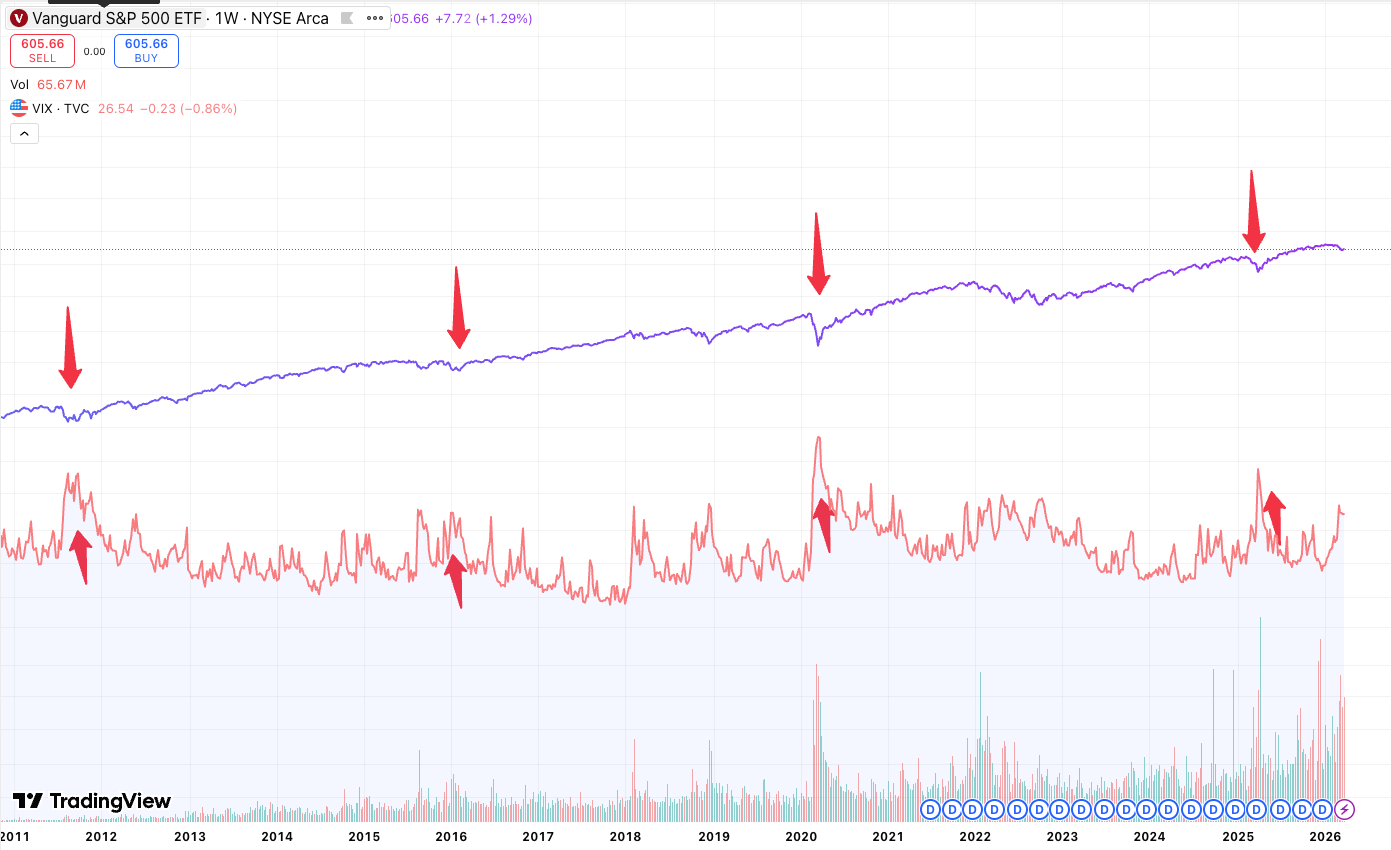
Red for VIX and Blue for S&P 500 powered by TradingView
The VIX is basically a volatility meter built from S&P 500 options. Specifically, it measures the expected volatility of S&P 500 options expiring roughly 30 days.
Here's the interesting part: when traders get fearful, they start buying options to hedge their positions. They're essentially buying insurance. And when demand spikes, prices go up.
When option premiums rise, that signals to the market that people expect bigger moves ahead. The VIX captures that expectation and spikes accordingly. On the flip side, when the market's cruising smoothly and investors are feeling confident, they don't need as much protection. Option demand drops, premiums fall, and the VIX stays low.
So it's really simple: the VIX is just the market showing you how much fear (or confidence) is priced into the options market at any given moment.
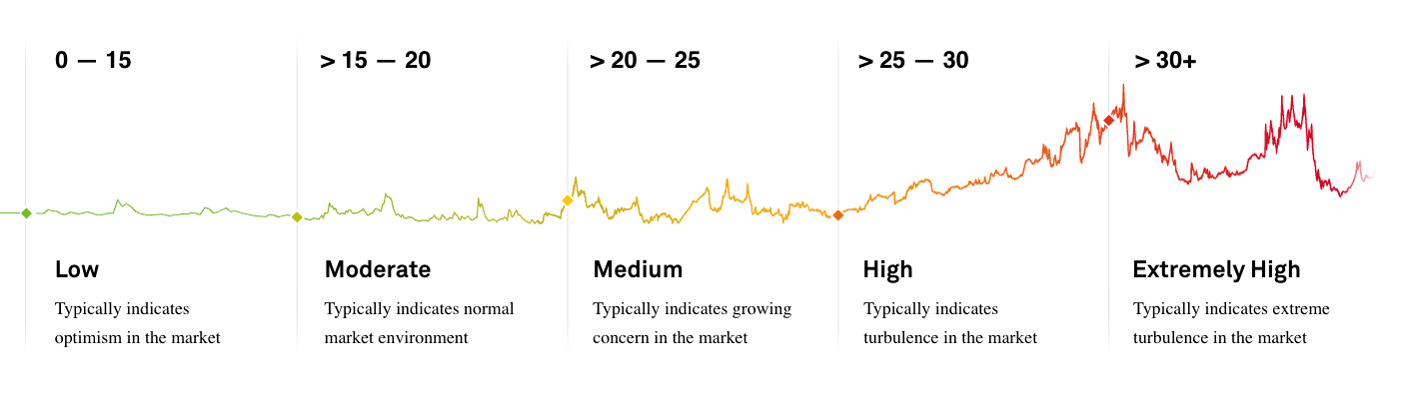
src : https://www.spglobal.com/spdji/en/vix-intro/
A VIX above 25 usually indicates high market volatility (source: SPGI).
Investors and traders do not always use the VIX for speculation. Instead, they use it as a portfolio protection tool.
How to Trade the VIX
If you open your brokerage app and search for "VIX" you'll notice something odd. There's no buy button. That's because the VIX is an index, not a stock.
Think of it like the S&P 500. You can't buy the S&P 500 directly either. Instead, you buy funds that track it - SPY, VOO. Same concept with the VIX.
Since the VIX cannot be bought or sold directly, traders who want volatility exposure use some workarounds:
VIX options, or exchange-traded products that track VIX futures.
VIX Options
VIX is a cash-settled index, which means you can actually trade it directly using options strategies. Before you start buying options on VIX, it’s important to understand the basics for Options trading.
When you buy a call or put option on the VIX, you're buying a contract that pays out based on where the VIX closes on expiration day. If you're right about the direction, you profit. If you're wrong, you lose your premium.
A Warning for Beginners Options trader: Avoid Selling Naked Options on VIX
Here's something beginners absolutely should know: When you sell a naked call or put on VIX, you're taking on unlimited risk. If volatility moves sharply in the wrong direction, your losses can exceed your initial premium many times over.
A naked option on VIX means you're selling an option without having the cash reserves or hedging protection to cover potential losses if the trade moves against you.
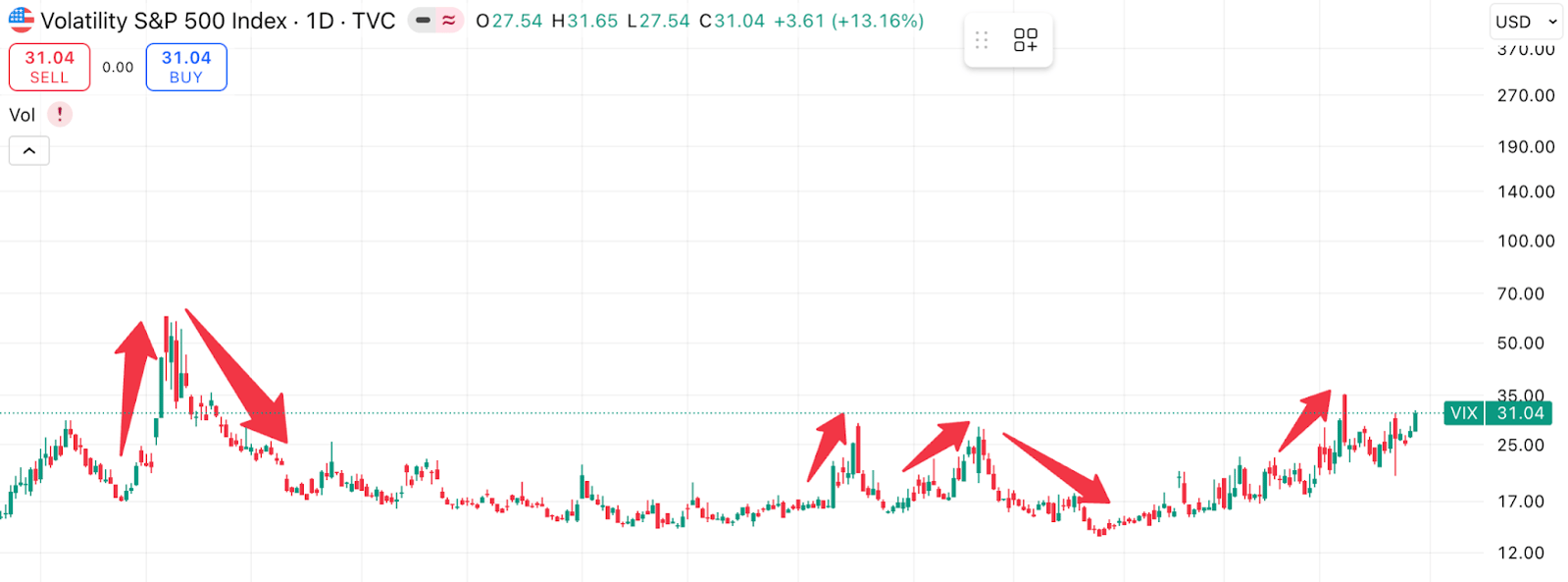
On the VIX specifically, volatility can move dramatically and suddenly, leaving you exposed to massive losses that can quickly spiral beyond what you can afford to pay.
VIX ETFs and ETNs
Since the VIX is just an index you can't directly own, ETF issuers can't simply buy the VIX. Instead, they buy VIX futures contracts, which are bets on where the VIX will be on a future date.
That's why VIX ETFs decay over time, they're bleeding value just from the mechanical process of managing futures contracts, even if VIX stays flat. This means that investors or traders should not hold these ETFs for a long term.
VIX ETF Quick Reference:
VXX
- Tracks S&P 500 VIX Short-Term Futures Index (front-month contracts)
- Provides near-term volatility exposure; decays significantly over time
- Best for short-term hedges only (days to weeks)
VIXY
- Also tracks S&P 500 VIX Short-Term Futures Index (same as VXX)
- Nearly identical to VXX in structure and performance
- Rapid response to market panic; good for tactical trading
UVXY
- Leveraged version of VIXY (1.5x daily exposure)
- Amplifies gains and losses during volatility spikes
- Only for experienced traders betting on short-term fear; frequent reverse splits
Common VIX Trading Strategies
The VIX gives you multiple ways to be exposed to volatility. Since you can trade VIX options directly, you can run all kinds of options strategies on it. For most investors though, the real appeal is using the VIX to hedge. Here are common strategies that get used on the VIX.
Long VIX Calls
Buying VIX calls, you get gains when volatility spikes during a market drop. However, the mindset when trading VIX calls is very different from buying a typical bullish stock option.
Think of a VIX call like insurance for your portfolio, not a lottery ticket. The real goal isn't predicting when a crash will happen. It's cushioning the blow when volatility spikes. You can't predict the exact timing, but you can build defenses ahead of time.
Several factors influence the price of a VIX call option
- Level of the VIX itself – VIX options rise when volatility expectations increase.
- Implied volatility of the option – when markets panic, both the VIX and option premiums expand.
- Time to expiration (theta) – if a volatility spike does not occur soon enough, the option steadily loses value.
Equally important is knowing when to close the position. VIX spikes tend to be sharp and short‑lived because volatility is strongly mean‑reverting. When panic hits the market, volatility can surge quickly and then collapse just as fast once conditions stabilize.
For this reason, many traders take profits aggressively during the spike. Once markets begin stabilising, VIX call options can lose value extremely quickly.
VIX Back Ratio Spread
A VIX back ratio spread (ratio backspread) is a low cost options strategy where you profit from a sharp spike in volatility.
Different traders structure this differently by adjusting the ratio of calls, strike selection, or expirations. But the core idea remains the same:
profit from a large volatility expansion while limiting initial cost.
Example setup:
- Sell 1 call at-the-money (ATM)
This brings in a premium and helps offset the cost of the long calls. - Buy 2 calls out-of-the-money (OTM)
These are further from the current price, typically cheaper in premium, and provide strong upside exposure if VIX spikes significantly.
When markets are calm and complacent, the VIX tends to sit at relatively low levels. These are typically the conditions where traders deploy this strategy, anticipating a potential volatility expansion.
If a market shock occurs and the VIX spikes sharply the gains from the long positions(2 calls) can significantly exceed the losses from the short call(1 call), resulting in strong net profits.
However, this strategy carries a key risk zone. If the VIX rises moderately but not aggressively, the short call begins to lose value while the long calls have not yet gained enough.
Final Takeaway
The VIX, when utilized correctly, serves as a powerful hedging tool. By employing defined-risk strategies and adhering to disciplined position sizing, traders can use volatility exposure to mitigate losses during significant market downturns.
Options trading is often regarded as the most versatile financial instrument, and the unique characteristics of the VIX make it suitable for specialized strategies, such as the VIX back ratio. A strong understanding of options trading is key for investors and traders seeking to identify opportunities during market shifts and movements.









submit your comment